

Sigenergy SigenStor review
By My Energy Mate Editorial · Last updated
8.8/10

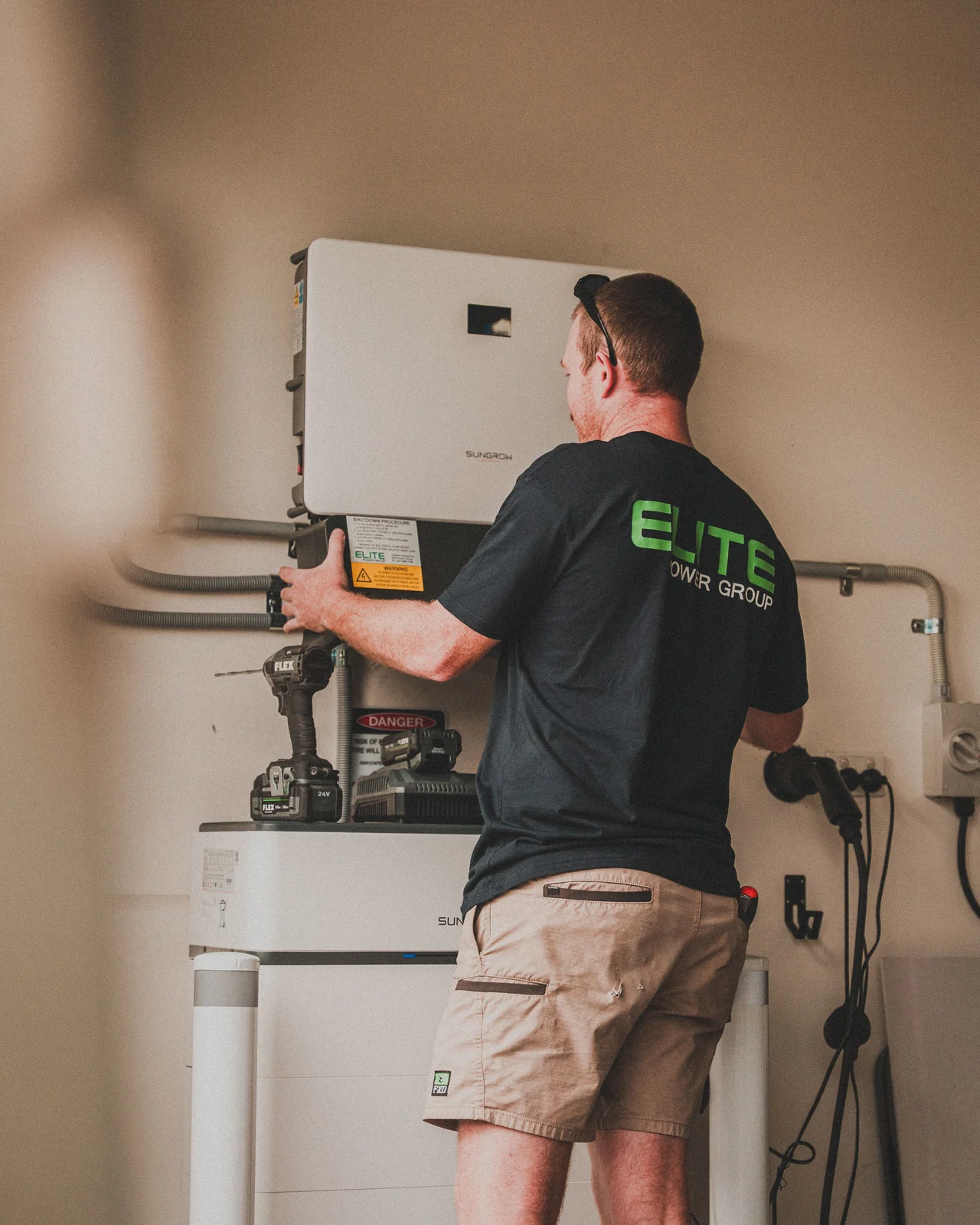
Sigenergy's SigenStor is a modular, stackable battery-inverter system (8 to 48 kWh) that has become Australia's best-selling battery in 2026. Installed prices start around A$8,400 for 8 kWh after the federal rebate. It wins on flexibility, an excellent app and integrated EV-charger options, though the brand is young and its long-term support record is unproven.

Cons
- Company founded in 2022, warranty longevity unproven
- Rapid growth has strained installer support at times
 Company founded in 2022, warranty longevity unproven
Pros
- Modular 8-48 kWh stacks grow with your usage
- Five-in-one design with integrated hybrid inverter, optional DC EV charger
- LFP chemistry, strong efficiency figures
- Aggressive pricing per usable kWh
 Modular 8-48 kWh stacks grow with your usage
Sigenergy SigenStor models and prices
| Model | Usable kWh | Power kW | Chemistry | Warranty | Backup | Installed price | $/kWh |
|---|---|---|---|---|---|---|---|
| Sigenergy SigenStor 8 kWh | 8.06 | 6 | LFP | 10 yrs | Yes | A$8,400–A$10,600 | A$1179 |
| Sigenergy SigenStor 16 kWh | 16.12 | 10 | LFP | 10 yrs | Yes | A$11,700–A$14,600 | A$816 |
Prices: installed, after the federal battery rebate, before applicable rebates.
Why Sigenergy took over the Australian market
Sigenergy launched in 2022 and by 2026 the SigenStor was selling more units in Australia than any other home battery. That happened for three reasons: it stacks, it includes the inverter, and it undercuts Tesla on price per kWh.
The SigenStor is a tower. A base unit holds the hybrid inverter and you stack battery modules on top, from 8 kWh up to 48 kWh in one tower. Households buy what they need now and add modules later without replacing anything.
| Spec | SigenStor |
|---|---|
| Usable capacity | 8.06 kWh to 48 kWh per tower, in modules |
| Continuous output | 6 kW to 12 kW depending on inverter unit |
| Chemistry | Lithium iron phosphate (LFP) |
| Built-in | Hybrid solar inverter, optional DC EV charger |
| Backup | Yes, whole home on larger inverter units |
| Warranty | 10 years |
| Three phase | Yes, on the three-phase inverter units |
The five-in-one design
Sigenergy markets the SigenStor as five products in one box: solar inverter, battery, backup supply, EV DC charger and energy management. The EV charger part is the genuinely unusual bit. A SigenStor with the DC charging module can send power from the battery straight into an electric car at DC, skipping two conversion steps and the losses that come with them.
For a household with solar, a battery and an EV, that means one supplier, one app and one install. For a household without an EV, it means paying for a capability you may never use, so ask for the price with and without it.
The track record question
Sigenergy is four years old. Its warranty runs ten years. Nobody has ever held a SigenStor warranty to term because the product has not existed long enough.
That is not a prediction of failure. The hardware is well reviewed, the chemistry is conventional LFP and the parent has scaled fast. But a ten year promise is only as good as the company behind it, and the Australian solar industry has a long history of brands that vanished with their warranties. Buyers who want a corporate history measured in decades should look at Sungrow, BYD or Tesla, and accept a higher price or fewer features.
Support capacity has also lagged sales at times during 2025 and 2026. If your installer is not a Sigenergy specialist, ask who handles a fault in year three.
How it compares on price
The 16 kWh stack is where Sigenergy wins. It gives more usable storage than a Powerwall 3 for a similar price, with a hybrid inverter included and room to grow. The 8 kWh entry point is expensive per kWh because the inverter base costs the same regardless of how many modules sit on it.
| Battery | Usable kWh | Installed after rebate | Per kWh |
|---|---|---|---|
| Sigenergy SigenStor 8 | 8.1 | $8,400 to $10,600 | $1,040 to $1,310 |
| Sigenergy SigenStor 16 | 16.1 | $11,700 to $14,600 | $725 to $905 |
| Tesla Powerwall 3 | 13.5 | $11,000 to $14,400 | $815 to $1,065 |
| Sungrow SBH 12.8 | 12.8 | $9,400 to $12,300 | $735 to $960 |
Who should buy a SigenStor
- Anyone who wants to start at 8 to 16 kWh and expand later without replacing hardware
- Homes with an EV now or within a few years, especially for DC charging
- Three-phase homes, where the three-phase inverter units are strong
- Buyers who want the most usable kWh per dollar from a well-regarded brand
- People comfortable with a young company carrying a ten year warranty
Additional things to note about Sigenergy SigenStor?
Sigenergy's key disadvantage is track record: the company is barely four years old, so its ten-year warranty has never been tested near its end. Support capacity has also lagged its explosive sales growth in Australia. Buyers who prioritise a decades-long corporate history may prefer Tesla or BYD despite higher prices.
Compare against every rival in the full battery comparison table, see where Sigenergy SigenStor lands in our best batteries rankings, or check what batteries cost installed before you ask for quotes.
Sigenergy SigenStor head to head
Side-by-side comparisons of Sigenergy SigenStor models against the rivals most shoppers weigh them up against.
- Sigenergy SigenStor 8 kWh against the Tesla Powerwall 3
- Sigenergy SigenStor 16 kWh against the Tesla Powerwall 3
- Sigenergy SigenStor 8 kWh against the Sigenergy SigenStor 16 kWh
- Sigenergy SigenStor 8 kWh against the Sungrow SBH 12.8 kWh
- Sigenergy SigenStor 8 kWh against the GoodWe Lynx Home F G2 12.8 kWh
- Sigenergy SigenStor 8 kWh against the BYD Battery-Box Premium HVM 11.0
- Sigenergy SigenStor 8 kWh against the Alpha ESS SMILE5 13.3 kWh
- Sigenergy SigenStor 8 kWh against the Fox ESS EP11
- Sigenergy SigenStor 16 kWh against the Sungrow SBH 12.8 kWh
- Sigenergy SigenStor 16 kWh against the GoodWe Lynx Home F G2 12.8 kWh
- Sigenergy SigenStor 16 kWh against the BYD Battery-Box Premium HVM 11.0
- Sigenergy SigenStor 16 kWh against the Alpha ESS SMILE5 13.3 kWh
- Sigenergy SigenStor 16 kWh against the Fox ESS EP11

