

Sungrow SBH/SBR review
By My Energy Mate Editorial · Last updated
8.4/10

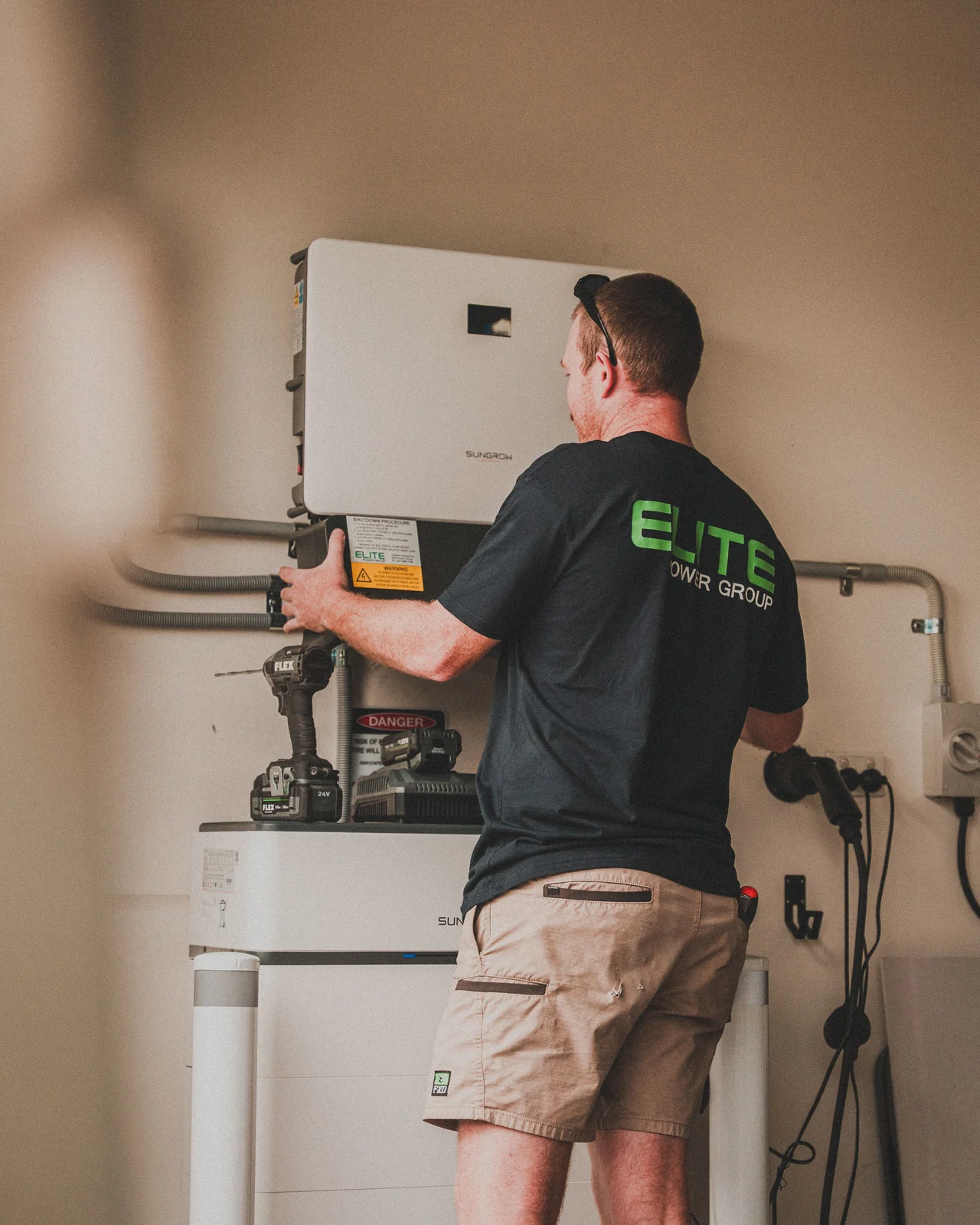
Sungrow's SBR and newer SBH batteries are modular LFP systems (9.6 to 40 kWh) from one of the world's largest inverter makers. At roughly A$750 to A$960 per usable kWh installed after the federal rebate they balance price, proven reliability and wide installer familiarity, making them the default safe choice for many Australian homes.

Cons
- Needs a Sungrow hybrid inverter for best results
- App is functional rather than polished
 Needs a Sungrow hybrid inverter for best results
Pros
- 27+ year old manufacturer with deep Australian support
- Modular LFP stacks, good round-trip efficiency
- Pairs natively with Australia's most-installed hybrid inverters
 27+ year old manufacturer with deep Australian support
Sungrow SBH/SBR models and prices
| Model | Usable kWh | Power kW | Chemistry | Warranty | Backup | Installed price | $/kWh |
|---|---|---|---|---|---|---|---|
| Sungrow SBH 12.8 kWh | 12.8 | 10.24 | LFP | 10 yrs | Yes | A$9,400–A$12,300 | A$848 |
Prices: installed, after the federal battery rebate, before applicable rebates.
The safe default
Sungrow has been making inverters since 1997 and is one of the two or three largest inverter manufacturers on earth. In Australia its hybrid inverters are among the most installed units in the country, which means almost every accredited installer has commissioned one, and spare parts and support are genuinely local.
The batteries come in two ranges. The older SBR stacks in 3.2 kWh modules from 9.6 to 25.6 kWh. The newer SBH stacks in larger modules from 12.8 to 40 kWh with higher output. Both are LFP and both are designed to pair with a Sungrow hybrid inverter.
| Spec | Sungrow SBH | Sungrow SBR |
|---|---|---|
| Usable capacity | 12.8 to 40 kWh | 9.6 to 25.6 kWh |
| Module size | 6.4 kWh | 3.2 kWh |
| Continuous output | Up to about 10 kW with matched inverter | Up to about 8 kW |
| Chemistry | LFP | LFP |
| Warranty | 10 years | 10 years |
| Inverter | Separate Sungrow hybrid required | Separate Sungrow hybrid required |
The ecosystem catch
Sungrow batteries are designed around Sungrow inverters. Pair them properly and everything works: one app, clean backup behaviour, full feature set. Pair them with a third-party inverter and you lose features or the combination is simply not supported.
That matters most on retrofits. If your home already has a Fronius, SolarEdge or GoodWe inverter, adding a Sungrow battery usually means replacing the inverter too, which adds $1,500 to $3,000. In that situation a BYD battery, which works with Fronius and several others, or an AC-coupled Powerwall 3 is often the cheaper path.
On a new solar and battery job, none of this is a problem. You buy the Sungrow inverter and battery together and the ecosystem works in your favour.
Real-world performance
Round-trip efficiency on the SBH sits around 95 percent at the battery, which is at the top of the residential class. Depth of discharge is effectively 100 percent of the stated usable figure, which is how LFP packs are normally rated.
Backup is the part to specify carefully. Sungrow systems can do whole-home or essential-circuit backup depending on how the installer wires the backup port and which inverter you choose. Whole-home backup on a large house needs one of the higher-output hybrids. Ask for the continuous backup kW in writing, not just the word backup.
Price and value
A 12.8 kWh SBH with a matched hybrid inverter runs about $9,400 to $12,300 installed after the federal rebate, or roughly $735 to $960 per usable kWh. That sits below Tesla and Sigenergy and above GoodWe and Fox ESS.
What you get for the premium over the budget brands is the support network. A 27 year old manufacturer with an Australian office and thousands of installers who know the product is worth something in year six, when a warranty claim needs someone to turn up.
Who should buy Sungrow
- Anyone buying solar and a battery together who wants the lowest-risk mainstream choice
- Homes that already have a Sungrow hybrid inverter, where the battery just bolts on
- Buyers who want proven local support more than the newest features
- Three-phase homes, where Sungrow's three-phase hybrids are well established
Who should look elsewhere
- Homes with a non-Sungrow inverter under five years old, where the pairing cost bites
- Anyone who wants the most polished consumer app, where Tesla and Sigenergy lead
- Buyers chasing the absolute lowest price per kWh
Additional things to note about Sungrow SBH/SBR?
Sungrow batteries work best inside a Sungrow ecosystem: pairing with third-party inverters limits features, so homes with existing non-Sungrow inverters face extra cost. The consumer app trails Tesla and Sigenergy for polish, and backup switchover needs the right wiring configuration to cover the whole home.
Compare against every rival in the full battery comparison table, see where Sungrow SBH/SBR lands in our best batteries rankings, or check what batteries cost installed before you ask for quotes.
Sungrow SBH/SBR head to head
Side-by-side comparisons of Sungrow SBH/SBR models against the rivals most shoppers weigh them up against.
- Sungrow SBH 12.8 kWh against the Tesla Powerwall 3
- Sungrow SBH 12.8 kWh against the Sigenergy SigenStor 8 kWh
- Sungrow SBH 12.8 kWh against the Sigenergy SigenStor 16 kWh
- Sungrow SBH 12.8 kWh against the GoodWe Lynx Home F G2 12.8 kWh
- Sungrow SBH 12.8 kWh against the BYD Battery-Box Premium HVM 11.0
- Sungrow SBH 12.8 kWh against the Alpha ESS SMILE5 13.3 kWh
- Sungrow SBH 12.8 kWh against the Fox ESS EP11

